

Scaling Shade: Bringing the Schoolyard Forest System to Nevada and New Mexico
/At Green Schoolyards America, we believe every child deserves a schoolyard that is a healthy, shaded, and vibrant place to learn and play. Our flagship initiative, the California Schoolyard Forest System® (CA SFS), was created to address the urgent need for climate-resilient school grounds.
In 2024, thanks to grants administered by the Nevada Division of Forestry and the New Mexico Energy, Minerals and Natural Resources Department and the support of generous funders, we took an exciting step forward and expanded this model beyond California to Nevada and New Mexico. While the landscapes and local policies shift across state lines, the goal remains the same: to increase tree canopy, provide vital shade, and reconnect kids with nature right where they spend their days. By bringing our model to these new contexts, we are learning how to scale schoolyard forests across the diverse environments of the American West.
Laying the Groundwork: Key Components
While some aspects of setting up a robust Schoolyard Forest System will be different in each place, we believe that a few pieces are essential to “ready the soil” for the trees to come. In both Nevada and New Mexico, our initial work has focused on:
gathering landscape data through extensive outreach, surveys, and interviews to understand the local context
analyzing relevant state and local policies and sharing findings and recommendations
launching state-level Schoolyard Forest Steering Committees, starting with developing relationships with key stakeholders
mapping schoolyard tree canopy in each state to identify areas of highest need and set a baseline against which to track progress
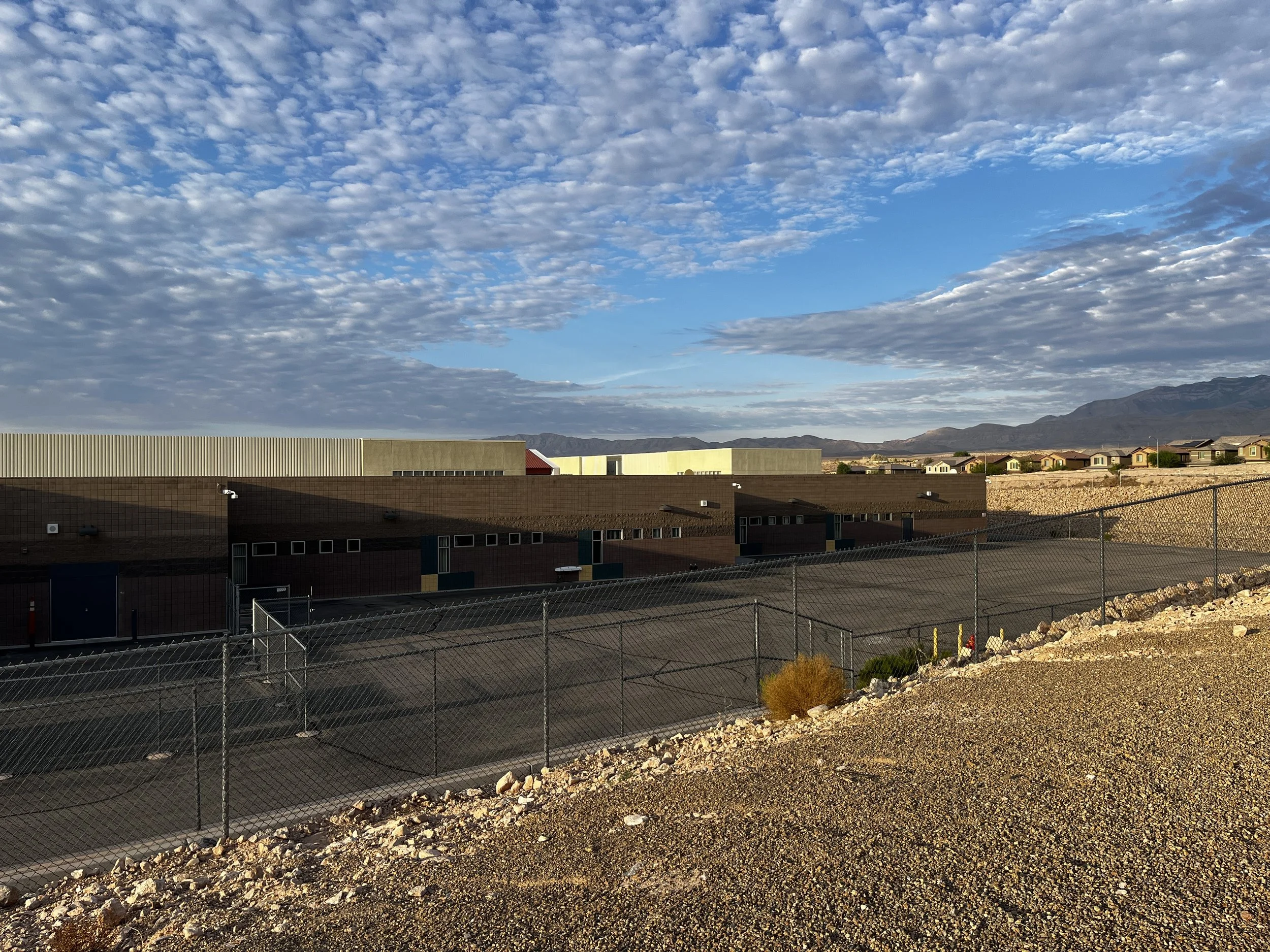
Robert L. Forbuss elementary School, Las vegas, NV
Nevada
Nevada has approximately 740 schools and 473,000 K-12 students, more than 80% of whom are eligible for Free or Reduced Priced Lunch and more than 60% of whom attend school in just one school district - Clark County - which includes the Las Vegas area.
Our outreach included interviewing and/or surveying 11 of the state’s 17 school districts, including Clark County, plus 2 tree planting organizations, 6 public agencies and municipalities, and 4 other urban forestry and shade-supporting organizations. We worked with these stakeholders to set the structure for a state-level Schoolyard Forest Steering Committee that will guide the work now and in the future, and have already recruited the first official members: the Nevada Division of Forestry and the Nevada Division of Outdoor Recreation.
One of our key initial learnings is the power of Nevada’s proactive legislative environment, especially the efforts of the NV Division of Outdoor Recreation’s Advisory Working Group (AWG) on Outdoor Education. We were proud to support Assembly Bill 165, which passed in June 2025 and encourages state-wide outdoor learning, including specific language around living schoolyards. This legislative win is helpful progress towards advancing schoolyard forests across the state.
New Mexico
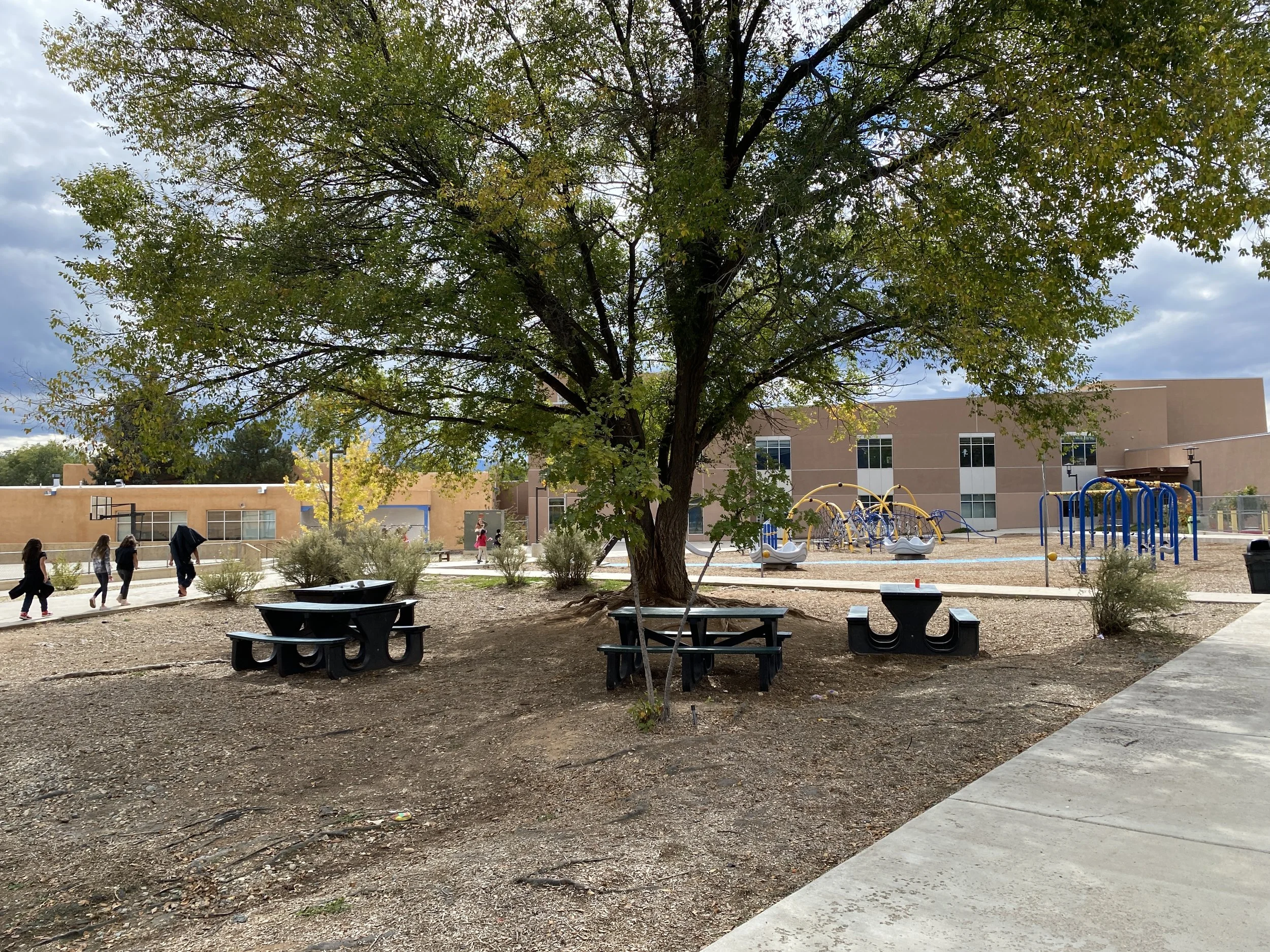
enos garcia elementary, Taos, NM
In New Mexico, the state’s approximately 315,000 PreK-12 students are spread over nearly 900 schools and 89 districts - including many “micro-districts” that serve the rural areas of the state. In addition, approximately 7,400 native students attend 44 tribally controlled or Bureau of Indian Education (BIE) -operated schools.
Our outreach engaged 10 school districts, 3 tribal-related education leaders, 7 tree-planting/urban forestry/shade-supporting organizations, 3 state agencies, and 1 Regional Education Cooperative. As in Nevada, we worked together to create the structure for a state-level Steering Committee, which currently includes the New Mexico Energy, Minerals, and Natural Resource Department (EMNRD), Forestry Division and the New Mexico Public Education Department. We have also been participating in the NM Urban Forestry Council’s quarterly meetings, a connection that will be critical as we begin to build state-specific resources such as a climate-adapted, school-appropriate tree list.
Thanks to a partnership with U.C. Berkeley’s College of Environmental Design we have begun to map schoolyard tree canopy in New Mexico with the help of students in Professor Lu Liang’s Geographic Information Systems course.
Looking Ahead
We are excited by the growing engagement in both states, and for what we are learning in the process! In the coming months we will publish comprehensive reports on the barriers and opportunities for scaling canopy in each state, and continue to strengthen each Steering Committee. We will continue to map schoolyard tree canopy in both states and plan to pilot an online version of our foundational Leadership Institute program to make it accessible to Nevada’s geographically distant participants. As in California, the goal will be to support districts in developing and adopting schoolyard forest action plans.
Together, these efforts in Nevada and New Mexico are proving that the Schoolyard Forest System isn't just a California solution—it’s a roadmap for a cooler, greener, and healthier future for students across the country. We can’t wait to see the first new forests take root.