

SCHOOLYARD FOREST SYSTEM®
RESOURCE LIBRARY
Welcome to the National Schoolyard Forest System®’s free online Resource Library, filled with practical materials to support schools and school districts as they plan, develop, use, and manage schoolyard forests.
The information below is organized as a traditional Table of Contents, and provides an additional way to navigate through the materials included in the Schoolyard Forest System’s Resource Library. The “chapters” below correspond to the tabs on the Resource Library’s home page.
Funding for the National Schoolyard Forest System’s Resource Library was provided by a grant administered by the California Department of Forestry and Fire Protection’s (CAL FIRE) Urban and Community Forestry Program, and private philanthropy. The collection below also includes articles and resources originally written for the National Outdoor Learning Library (Chapters 7-10), created during the pandemic as part of the National COVID-19 Outdoor Learning Initiative (NCOLI).

OUR WORK AND PARTNERS
— Resource Library, welcome page and overview
— National Schoolyard Forest System®, introduction to this national program
○ Shifting the Landscape: Policy as a Critical Strategy, Sept. 2024 (blog post)
○ Schoolyard Forests in the News (webpage)
— California Schoolyard Forest System®, California context, vision, and goals
○ Launch webinar with founding partners, October 2022 (video)
○ Creating Schoolyard Forests: A Look at the SoCal Leadership Institute, Nov. 2024 (blog post)
○ Early Impacts and Positive Results from Schoolyard Forest Leadership Institute, June 2025 (blog post)
© Green SChoolyards AMerica
INTRODUCTION
— Rationale for Schoolyard Forests, chapter introduction (webpage)
— Introduction to Schoolyard Forests in the Context of Green Schoolyards (recorded webinar)
BENEFITS OF SCHOOLYARD FORESTS
— Overview
— Benefits of Schoolyard Forests, comprehensive summary with extensive references (PDF)
— Health Benefits of Schoolyard Forests (PDF)
— National Framework: Making the Academic Case for Schoolyard Forests (PDF)
○ PreK-12 Education Standards Alignment: Schoolyard Forest Lessons and Activities (spreadsheet)
— California Framework: Making the Academic Case for Schoolyard Forests (PDF)
MAPPING SCHOOLYARD TREE CANOPY EQUITY
— California Schoolyard Tree Canopy Study (study overview)
— Related interactive map of California’s public schools (clickable map)
RESEARCH SUMMARIES AND POLICY RECOMMENDATIONS
— California Students Need Trees at School, policy brief with key findings from the California Schoolyard Tree Canopy Study (PDF)
— Taking Schoolyard Forests to Scale in California, policy brief sharing our California policy research findings and recommendations for what is needed to take this movement to scale across the state (PDF)
— California Department of Education Policy Analysis, policy brief that identifies strategies for removing existing barriers for schoolyard greening (PDF)
— What Do Schoolyard Forests Really Cost? Comparisons for Schoolyard Forests, Asphalt, Grass, and Artificial Turf (PDF)
— Improving State Policy to Scale Green Schoolyards: Division of the State Architect Policy Analysis and Recommendations (PDF)
© Green SChoolyards AMerica
HOW TO DESIGN AND CREATE A SCHOOLYARD FOREST
— Chapter introduction (webpage)
— How to Create a Schoolyard Forest: Processes and Best Practices (PDF)
— How to Design a Schoolyard Forest: Design Principles and Components (PDF)
— Schoolyard Forest Design Process and Principles (recorded webinar)
— Designing for Children’s Health, Learning, and Play (recorded webinar, speaker links)
— Spacings App, a free augmented reality tool to help visualize your schoolyard forest (PDF)
— Schoolyard Forest Photo Gallery, ideas and inspiration (webpage)
— Establishing Schoolyard Forests: Strategies for Incorporating Schoolyard Forests into Districts’ Plans and Systems (PDF)
ENGAGING STUDENTS IN DESIGN
— Engaging Students in Design: Strategies and Lessons (webpage with many ideas)
— How Cool is Your Schoolyard?, hands-on activity to engage students in schoolyard temperature analysis to help determine where trees should be planted (webpage and PDF)
— Tree Research with Students, ideas for teachers (webpage)
— Schoolyard Forest Rangers® program
© Green SChoolyards AMerica
SELECTING TREES
— How to Select Trees for Your Schoolyard: General Guidelines (PDF)
— Selecting Trees for Schoolyard Forests (recorded webinar, speaker links)
— California Tree Palette for Schoolyard Forests, introduction, goals, design considerations, tree lists (webpage)
— Sunset Climate Zones, link to external page to find your school’s Sunset Zone (external)
— Master Tree Selection Palette for All Sunset Zones in California (PDF)
— Tree Palettes for each individual Sunset Zone in California:
○ Sunset Zone 1 (PDF)
○ Sunset Zone 2 (PDF)
○ Sunset Zone 3 (PDF)
○ Sunset Zone 4 (PDF)
○ Sunset Zone 5 (PDF)
○ Sunset Zone 6 (PDF)
○ Sunset Zone 7 (PDF)
○ Sunset Zone 8 (PDF)
○ Sunset Zone 9 (PDF)
○ Sunset Zone 10 (PDF)
○ Sunset Zone 11 (PDF)
○ Sunset Zone 12 (PDF)
○ Sunset Zone 13 (PDF)
○ Sunset Zone 14 (PDF)
○ Sunset Zone 15 (PDF)
○ Sunset Zone 16 (PDF)
○ Sunset Zone 17 (PDF)
○ Sunset Zone 18 (PDF)
○ Sunset Zone 19 (PDF)
○ Sunset Zone 20 (PDF)
○ Sunset Zone 21 (PDF)
○ Sunset Zone 22 (PDF)
○ Sunset Zone 23 (PDF)
○ Sunset Zone 24 (PDF)
PLANTING GUIDANCE
— Tree Planting Cue Card, in English (PDF, from CAL FIRE)
— Tarjeta para la Plantación de Árboles, in Spanish (PDF, from CAL FIRE)
— Planting Trees and Workdays (webpage, with links)
SPECIALIZED FOREST TYPES
— Schoolyard Food Forests (recorded webinar, resources)
© Sharon Gamson Danks
STEWARDSHIP PRINCIPLES AND BEST PRACTICES
— How to Care for Schoolyard Forests and Living Schoolyards (webpage)
— Part 1: Stewardship Principles and Best Practices (PDF)
— Part 2: Stewardship Tasks, Costs, and Resources (PDF)
— Stewarding School Trees for Long-term Benefit (recorded webinar, resources and Q&A)
— Maintenance and Stewardship of Schoolyard Forests (recorded webinar, resources and Q&A)
ENGAGING STUDENTS IN SCHOOLYARD STEWARDSHIP
— Stewardship Tasks with Students, tips, strategies, and resources for watering, weeding, mulching, raking, pruning, and monitoring tree health with students (webpage with many links)
— Stewardship Lessons, many PreK-12 resources and links by grade level (webpage)

© Green SChoolyards AMerica
PLANNING AND IMPLEMENTING SCHOOLYARD FORESTS WITH STUDENTS
— Chapter introduction (webpage)
Preparing for Planting
— How Cool is Your Schoolyard?, hands-on activity (PDF)
— Appreciating Trees: Brainstorm and Research with Students (webpage, activity with links)
— Engaging Students in Design: Strategies and Lessons (webpage with many ideas)
— Tree Research with Students, ideas for teachers (webpage)
— Planting Trees and Workdays (webpage, with links)
After Planting
— Adopt a Tree – Lesson Collection (webpage with links to many activities)
— Signs and Displays (webpage article)
— Photo Monitoring (webpage article)
Ongoing Stewardship
— Stewardship Lessons, many PreK-12 resources and links by grade level (webpage)
○ Preschool Stewardship Lessons (webpage with activity links)
○ Grades K-5 Stewardship Lessons (webpage with activity links)
○ Grades 6-8 Stewardship Lessons (webpage with activity links)
○ Grades 9-12 Stewardship Lessons (webpage with activity links)

© PAIGE GREEN EDUCATION OUTSIDE
TREE AND FOREST LESSONS AND ACTIVITIES BY SUBJECT – IN-DEPTH COLLECTION
— PreK-12 Education Standards Alignment: Schoolyard Forest Lessons and Activities (spreadsheet)
— Taking Academics Outdoors, PreK-12 lessons and activities organized by subject and grade level, including ideas for science, math, language arts, social science, visual and performing arts, nature play, social-emotional learning, and physical education
○ Preschool Forest Lessons (webpage with activity links)
○ Grades K-5 Forest Lessons (webpage with activity links)
○ Grades 6-8 Forest Lessons (webpage with activity links)
○ Grades 9-12 Forest Lessons (webpage with activity links)
ADDITIONAL RESOURCES FOR EDUCATORS
— Citizen Science Opportunities (webpage with activity links)
— Outdoor Classroom Culture and Management (webpage article)
— Tips for Creating a Positive Outdoor Experience for Students (webpage article)
— Taking Curriculum Outside (webpage article)
— Weather Considerations (webpage article)
— Taking Climate Literacy into the Schoolyard (webpage article with links)
— Climate Change Resources for TK-12 Grade (collection, from the California Environmental Literacy Initiative)
— An Approach to Walking Field Trips (webpage article)

© Green Schoolyards America
CALIFORNIA SCHOOLYARD FOREST SYSTEM® CASE STUDIES
— Schoolyard Forest Pilot Projects, March 2024 (blog post)
— Parkway Elementary Schoolyard Forest Opens!, April 2025 (blog post)
— Two New Schoolyard Forests Point to a Greener Future for California’s Schools, Nov. 2025 (blog post)
SCHOOL DISTRICT AND CITY-SCALE CASE STUDIES FROM OUR WEBINARS
— Chapter introduction (webpage)
— Community of Practice for Schoolyard Forests, summary, ongoing webinar series (webpage). Past presentations include the following case studies:
Berkeley Unified School District, California (recorded presentation, article PDF)
Rialto Unified School District, California (recorded presentation, article PDF, student storymap)
Los Angeles Unified School District, California (recorded presentation)
Oakland Unified School District, California (recorded presentation, article PDF, OUSD guidelines)
Lagunitas School District and Harmony Union School District, California (recorded presentation)
Schoolyard Forest System Resource Library Overview (recorded presentation, not a case study)
Grün macht Schule, Berlin, Germany (presentation not recorded, slide deck, website link)
Project Canopy, San Antonio, Texas (recorded presentation, resources and Q&A)
Alabama Forestry Foundation, Alabama (recorded presentation, resources and Q&A)
Bienenstock Natural Playgrounds, United States and Canada (recorded presentation, resources and Q&A)
Vancouver, Washington (recorded presentation, resources and Q&A)
Maine Tree Foundation, Maine (recorded presentation, resources and Q&A)
Texas Tree Foundation, Texas (recorded presentation, resources and Q&A)
Minnesota Department of Natural Resources, Minnesota (recorded presentation)
Miami-Dade County Public Schools, Florida (recorded presentation, resources and Q&A)
New Hampshire Division of Forests and Lands, New Hampshire (recorded presentation)
Sacramento City Unified School District, California (January 2026)
Chapter 5: Introduction to Living Schoolyards
© Green SChoolyards AMerica
VISION FOR LIVING SCHOOLYARDS
— What are Living Schoolyards?, chapter introduction (webpage)
— Green Schoolyards America’s Vision for Living Schoolyards (webpage)
— A Vision for Climate-Resilient Green Schoolyards Across California (PDF)
— Asphalt to Ecosystems: Design Ideas for Schoolyard Transformation (webpage)
— Getting from Here to There (PDF book excerpt, Asphalt to Ecosystems)
WHY CREATE LIVING SCHOOLYARDS?
— School-scale Benefits: The Green Schoolyard Movement (PDF)
— City-scale Benefits: The Power and Potential of Green Schoolyards (PDF)
— Asphalt Jungle: Living Schoolyards (Podship Earth, Episode 13; podcast)
— Address Systemic Inequities in School Infrastructure (webpage article)
— From Green Schoolyards to Green Communities (Nature Kids Radio; podcast)
— Depaving California Schools for a Green Future: Report Findings (recorded webinar)
— The Living Schoolyards Act Lecture Series: Mental and Physical Health Benefits (recorded webinar)
— The Living Schoolyards Act Lecture Series: Equity, Educational, and Academic Benefits (recorded webinar)
LIVING SCHOOLYARD CASE STUDIES
— It Takes a Village: Participatory Design and Stewardship (PDF)
— Turning Nature into Classrooms (video)
— Courtyard Oases: Ecology at the Heart of the School (PDF)
— Stewardship Begins at School: An Ecological Schoolyard Example from England (PDF)
— Voices from the International School Grounds Movement (video)
— Examples of outdoor learning on green schoolyards during the pandemic:
○ California — Golestan Education
○ California — Park Day School
○ Colorado — Boulder Valley School District
○ District of Columbia — Briya Public Charter School
○ Illinois — Waldorf School of DuPage
○ Maine — Portland Public Schools
○ Massachusetts — Falmouth Public Schools
○ North Carolina — Durham Public Schools
○ Tennessee — Linden Waldorf School
○ Texas — Austin Independent School District
○ Virginia — Arlington Public Schools
Chapter 6: Ecological Systems and nature-based Infrastructure
STRATEGIES TO IMPROVE CLIMATE RESILIENCE AND REDUCE EXTREME HEAT
— Reducing Extreme Heat and Supporting Thermal Comfort with Schoolyard Forests (recorded webinar, speaker links)
— The Living Schoolyards Act Lecture Series: Ecological and Climate Benefits (recorded webinar)
WATERSHED STEWARDSHIP
— Stormwater Schoolyards (recoded webinar, speaker links)
— Living Schoolyards for Stormwater Management (recorded seminar presentation at California State Water Resources Control Board)
— Living Schoolyards as Stormwater Infrastructure: Inspiring School Grounds of Berlin (Two-part training workshop with the San Francisco Public Utilities Commission and SFUSD; Video: Part 1 and Video: Part 2)
— Living Schoolyard Activity Guide, U.S. Edition (See chapter on watershed stewardship, pages 157-169)
— International School Grounds Month Activity Guide (See chapter on watershed stewardship, pages 125-133)
WILDLIFE HABITAT
— Wildlife Habitat as Part of Living Schoolyards (recorded webinar, speaker links)
— Biodiverse School Grounds that Promote Outdoor Learning and Play (recorded webinar)
— Living Schoolyard Activity Guide U.S. Edition (See chapter on wildlife and habitat, pages 123-155)
— International School Grounds Month Activity Guide (See chapter on wildlife and habitat, pages 107-123)
THOUGHTFUL USE OF MATERIALS: REDUCE, REUSE, RECYCLE, ROT
— Selecting Schoolyard Materials to Reduce Impact on Environmental and Human Health (recorded webinar, resources and Q&A)
— Ecologically Sensitive Materials for Schoolyard Landscapes (Book excerpt, Asphalt to Ecosystems)
— Managing Food Waste Outside (webpage article)
— Living Willow Structures Enhance Children’s Play Environments (PDF)
— Living Schoolyard Activity Guide, U.S. Edition (See chapter on thoughtful use of materials, pages 185-193)
— International School Grounds Month Activity Guide (See chapter on thoughtful use of materials, pages 143-157)
AIR QUALITY
— Addressing Air Quality Impacts in Schoolyards (recorded webinar, resources and Q&A)
DESIGN FOR HEALTH AND INCLUSION
— Living Schoolyards for Children’s Microbiome Health (recorded webinar)
— Inclusive Design for Outdoor Spaces (webpage article)
CHAPTER 7: School Gardens ANd Outdoor Meals

© Paige green education outside
SCHOOL GARDENS AND FOOD FORESTS
— Schoolyard Food Forests (recorded webinar, resources)
— Introduction to School Gardens: Getting Started
— Introduction to School Gardens: Design and Teaching
— Storage and Supplies for Outdoor Teaching
— Making Paved Spaces Comfortable
— Using Raised Beds
— Regenerative Gardening Practices
— Living Schoolyard Activity Guide U.S. Edition (See chapter on schoolyard agriculture and food, pages 83-97)
— International School Grounds Month Activity Guide (See chapter on schoolyard agriculture and food, pages 75-87)
TAKING SCHOOL MEALS OUTDOORS
— Outdoor Meals at School
— Planning Outdoor Meals — Getting Started
— Implementing Outdoor Meal Programs
— Managing Waste at Mealtimes
— Snacks and Cooking Outdoors with Children
— Case Study Virginia — Arlington Public Schools
— Living Schoolyard Activity Guide U.S. Edition (See chapter on schoolyard agriculture and food, pages 83-97)
— International School Grounds Month Activity Guide (See chapter on schoolyard agriculture and food, pages 75-87)
CHAPTER 8: SCHOOLYARD PLAY AND SOCIAL SPACES

© earlyspace
STRATEGIES AND PROJECT IDEAS TO ENRICH OUTDOOR PLAY
Ideas and strategies for developing outdoor spaces and activities that promote unstructured and structured play.
— Green Schoolyards for Lifelong Physical Activity (recorded webinar, references)
— Nature Play Spaces (webpage article)
— Living Willow Structures Enhance Children’s Play Environments (PDF)
— Living Schoolyard Activity Guide, U.S. Edition (See chapter on play, pages 43-51)
— International School Grounds Month Activity Guide (See chapter on play, pages 35-49)
THE IMPORTANCE OF PLAY AND ADVENTURE IN CHILDREN’S LIVES
Resources explaining the value and benefits of play to support child development
— Embracing Risky Schoolyard Play for Exploration, Learning, and Growth (recorded webinar, Q&A)
— Nature Kids Radio: Episode 10: From Green Schoolyards to Green Communities with Sharon Danks (podcast)
— Uneven Play: WHYY Explores the Need for More Playground at Schools in Philadelphia
— International School Grounds Alliance’s Statement on Risk in Play and Learning (declaration; sign on)
CHAPTER 9: Schoolyard infrastructure and Management Strategies

© green schoolyards america
SELECTING INFRASTRUCTURE FOR OUTDOOR CLASSROOMS
A framework for thinking about the furnishings that will be most useful for your school’s classroom and program needs, as well as climate context.
— Outdoor Seating and Work Surfaces
— Shade and Shelter
— Outdoor Teaching Supplies and Storage
— Making Paved Spaces Comfortable
— Using Raised Beds in Paved Schoolyards

© green schoolyards america
STRATEGIES FOR MANAGING WEATHER
Outdoor learning can happen in all climates, across a very wide range of temperatures and conditions. Find tips and strategies for keeping teachers and students comfortable in different types of weather.
— Outdoor Learning in All Types of Weather
— Strategies for Managing Hot Weather
— Strategies for Managing Cold Temperatures
— Winter Schoolyard Explorations (activities)
© linden waldorf school
MANAGING CHALLENGES RELATED TO BEING OUTSIDE
The unique challenges presented by outdoor learning may seem daunting, but we’ve gathered thoughtful strategies from experts to help you plan for success.
— Addressing Noise and Sound Outdoors
— Outdoor Classroom Management
— Tips for Managing Pests
— Reducing Outdoor Allergens
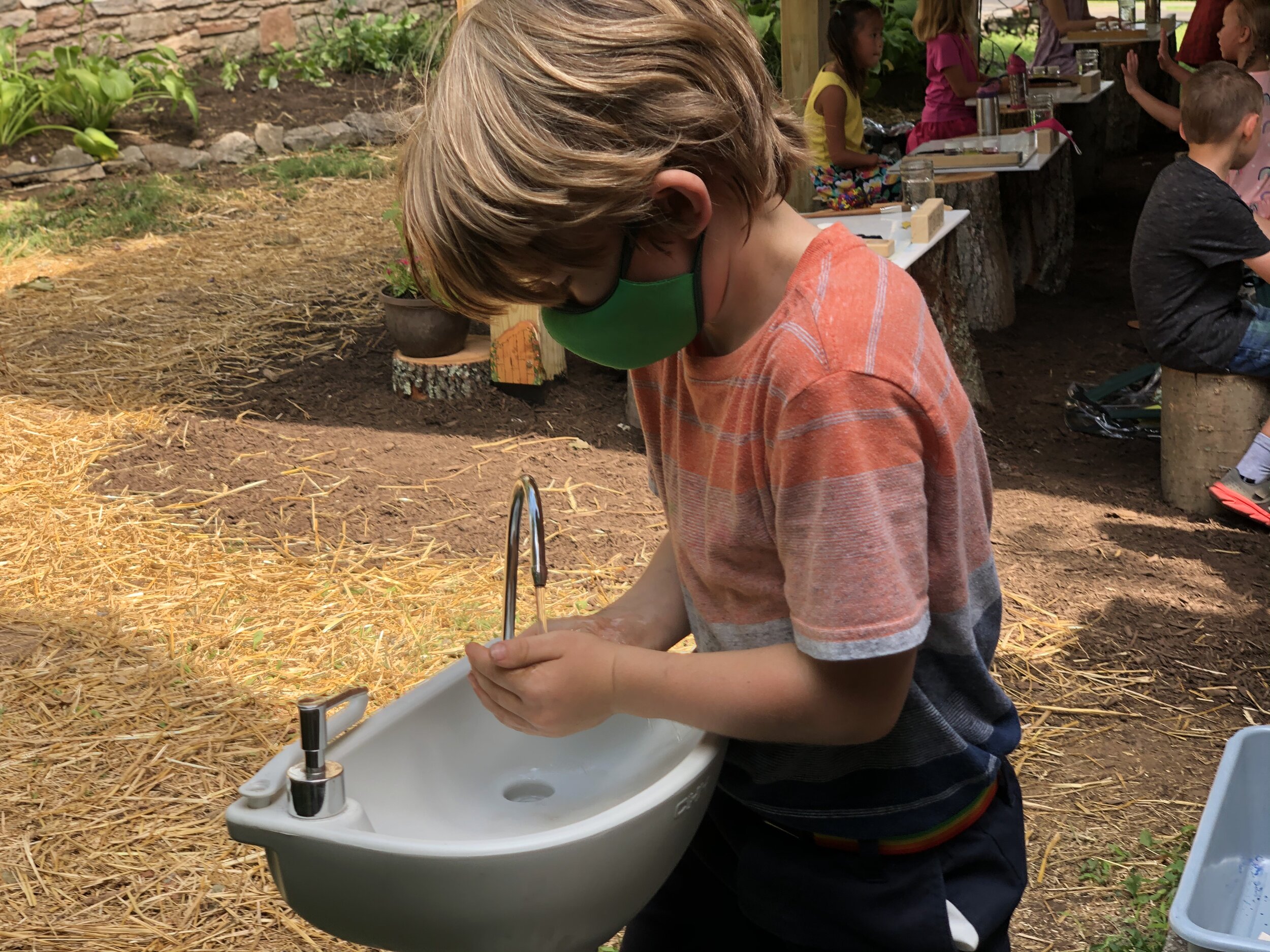
— Hand Washing Options
— Outdoor Learning Resource List

MOVING LEARNING OFFSITE TO PARKS AND OTHER PUBLIC SPACES
When outdoor learning can’t happen in the schoolyard, moving school classes and programs offsite to outdoor spaces in the community is a great option but it requires planning to implement efficiently.
— Using Public Spaces as Outdoor Classrooms, chapter introduction
— Planning Strategies for Using Parks and Open Spaces for Outdoor Learning
— Identifying Outdoor Learning Opportunities Offsite
— Assessing Suitability of Potential Outdoor Learning Spaces Offsite
— Emergency Preparedness for Teaching in Parks and Other Offsite Locations
— Planning School Transportation
— Creating a Written Agreement Between a Property Owner and a School District
— Memorandum of Understanding (MOU) Template for District-Park Partnerships (MS Word or Google Doc)
Planning Examples and Mapping Tools for Offsite Learning
— Texas — Austin Independent School District
— Colorado — Lake County School District
— California — San Francisco Map of Schools and Open Spaces Citywide
— Maryland — Maryland Park Equity Mapper, Maryland Department of Natural Resources
CHAPTER 10: POLICY AND Community Engagement TO SUPPORT OUTDOOR PROGRAMS

© maria durana
POLICIES THAT PROMOTE LONG-TERM SCHOOLYARD GREENING AND OUTDOOR LEARNING EFFORTS
— Policy Exemplars that Advance Living Schoolyards, Environmental Literacy, and Sustainability (webpage)
— Grants for Schoolyard Forests and Green Schoolyards (webpage)
COMMUNITY ENGAGEMENT STRATEGIES
— Community Engagement Strategies, chapter introduction, (webpage)
— Steps for Engaging Communities in Developing Outdoor Learning Strategies (webpage article)
— Key Community Partners (planning tool)
— Living Schoolyard Activity Guide U.S. Edition (See chapter on community engagement, pages 195-203)
— International School Grounds Month Activity Guide (See chapter on community engagement, pages 159-169)
Schoolyard Forest System® Resource Library
The Schoolyard Forest System® Resource Library is a set of practical tools for schools and districts working to increase tree canopy on public school grounds to shade and protect pre-K-12 students from extreme heat and rising temperatures due to climate change. Funding for the first phase of this initiative was provided by a grant administered by the California Department of Forestry and Fire Protection (CAL FIRE) Urban and Community Forestry Program, and private philanthropy. This initiative was founded by Green Schoolyards America in collaboration with the California Department of Education, the California Department of Forestry and Fire Protection (CAL FIRE), and Ten Strands.
The collection above also includes articles and resources originally written for the National Outdoor Learning Library, created during the pandemic in 2020 as part of the National COVID-19 Outdoor Learning Initiative (NCOLI). The NCOLI was founded by Green Schoolyards America, The Lawrence Hall of Science, San Mateo County Office of Education, and Ten Strands.